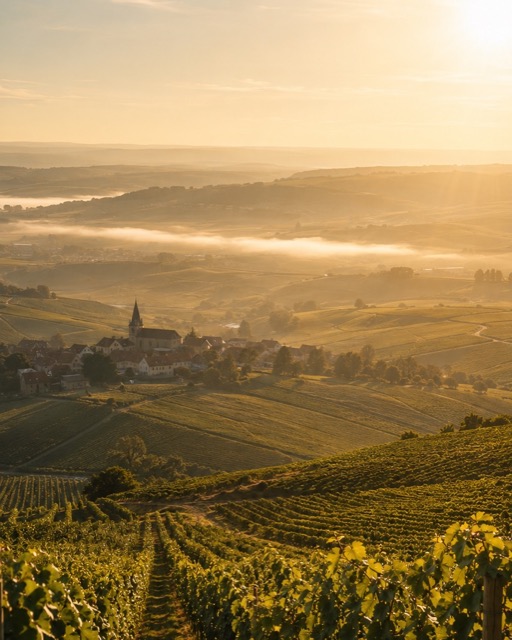
France
Champagne
Bubbles
Second fermentation, blending, dosage and the whole vocabulary of the label. The best-known sparkling wine in the world, so you probably already have an opinion about it.
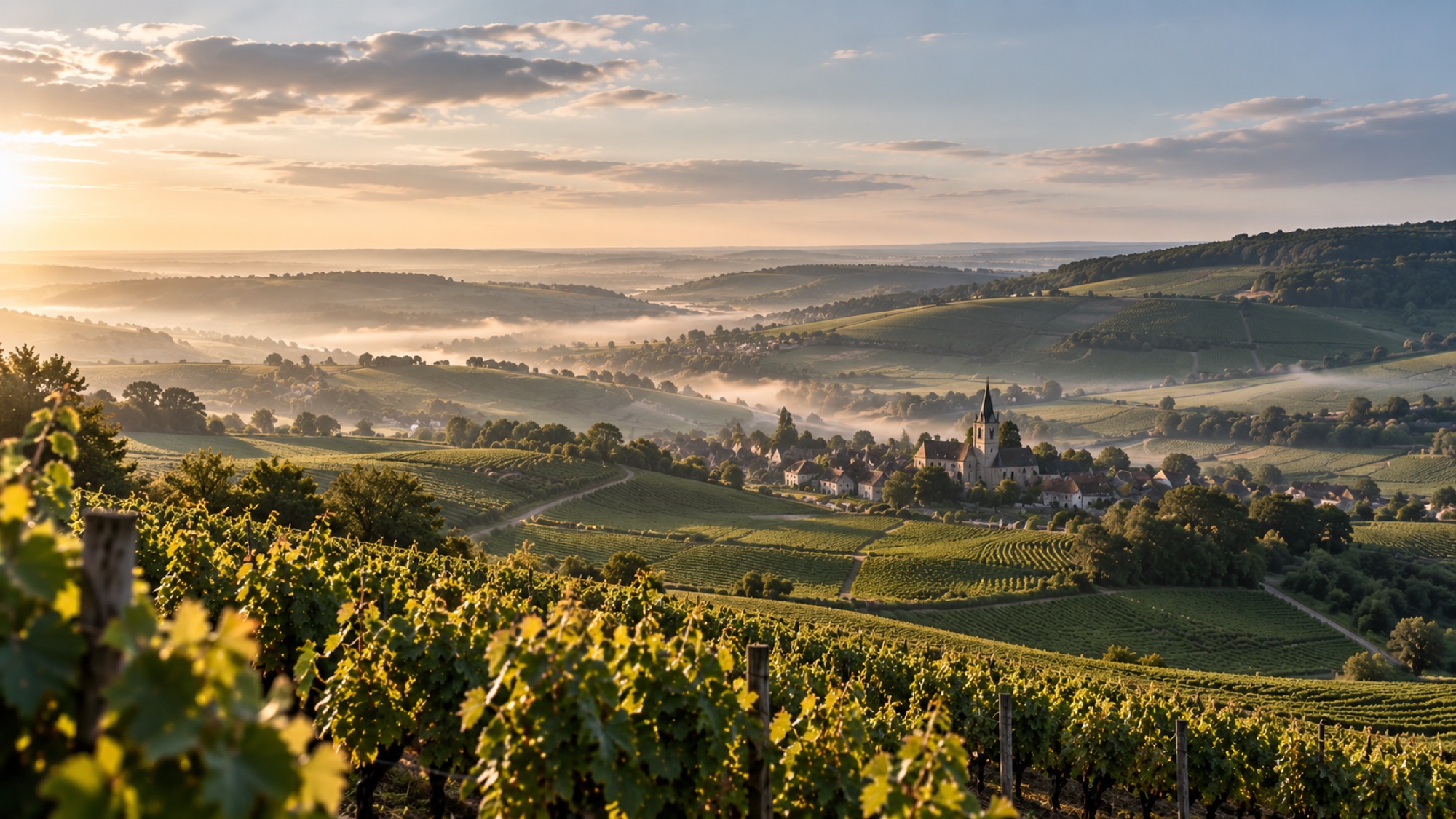
Cosecha takes you through the wine regions of the world the way you would discover them if you were standing among the vines yourself.
You read short stories about the place, the grapes and the wine. Along the way you answer questions. Finish a region and you earn the stamp for your wine passport.
Champagne and one region of your choice are free. No account, no ads, no tracking.
Everyone sets off from the same place. You begin with the chalk soil and the grapes and end with the second fermentation, dosage and reading a Champagne label.
A chapter is a handful of short stories. No dry lists, but the story behind what ends up in your glass. Along the way you get questions about what you have just read.
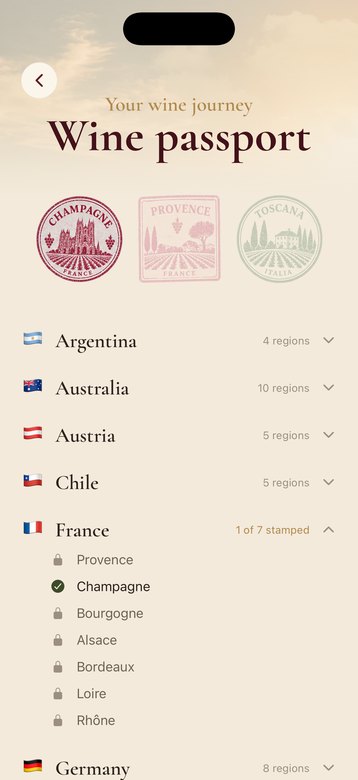
At the end of a region, twenty questions wait about everything you came across on the way. Score 80% or more and you earn the region's stamp. From then on it sits in your Wine Passport.
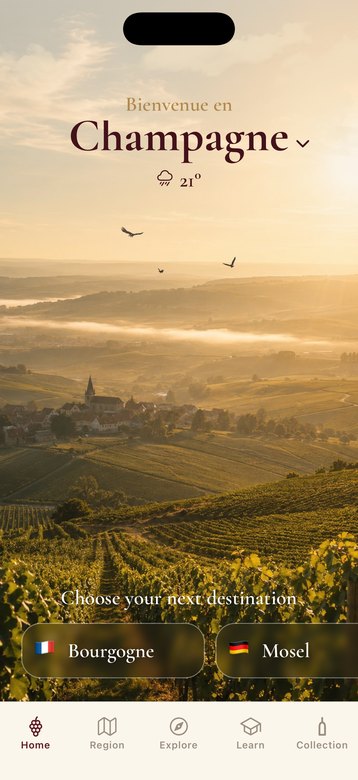
After Champagne you choose your second destination yourself: Burgundy, the Mosel, Piedmont or Rioja. You can read the first chapter of all four for free, so you know where you are heading. The other regions can be unlocked soon.
Behind Cosecha lies the landscape of the region you are travelling through at that moment, and that landscape is alive.
The weather in Cosecha follows the real weather in the wine region. If it rains in Champagne, it rains on your screen too. When the sun breaks through, it does for you as well.
Towards evening the golden hour falls over the vineyards. At night the stars come out. Now and then a flock of birds passes by. It is not decoration: you are reading about a place, so it helps when that place behaves a little like a real one.
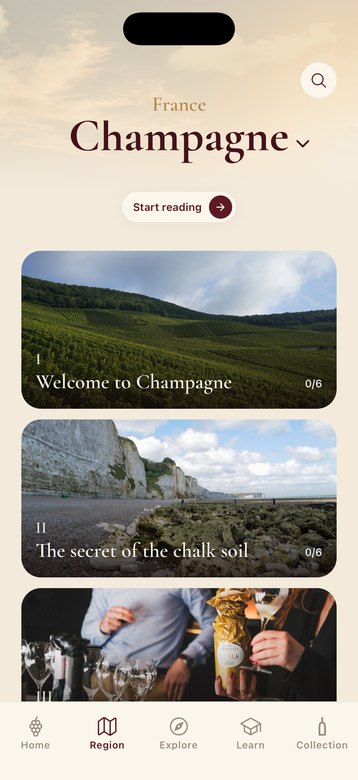
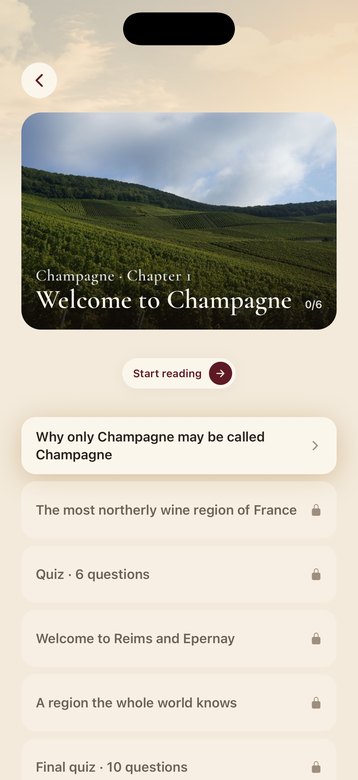
We start with five of the best-known wine regions in Europe.
Not because they are the only good wine regions, but because each of them can teach you something fundamental about wine.
Champagne and one of the other four are free in the app. The rest can be unlocked soon.
Bubbles
Second fermentation, blending, dosage and the whole vocabulary of the label. The best-known sparkling wine in the world, so you probably already have an opinion about it.
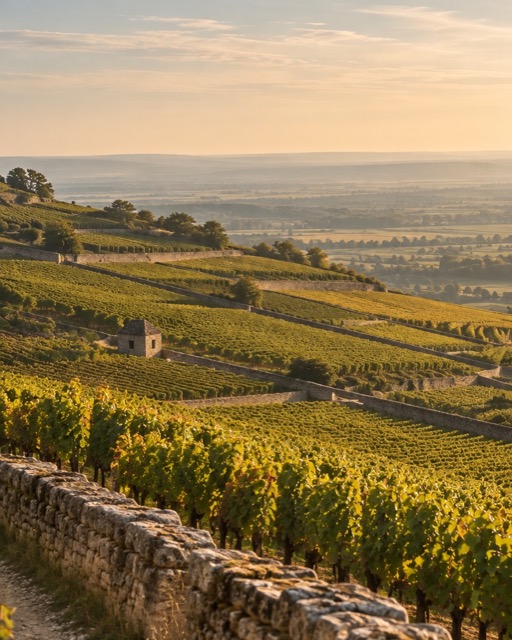
Terroir
Two grapes, hundreds of plots and the ladder from regional to grand cru. Once you understand Burgundy, you start reading other wine regions better too.
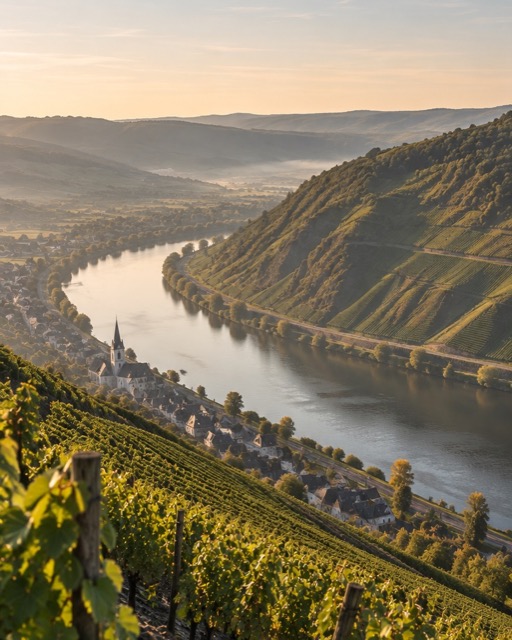
Ripeness & acidity
Slate, absurdly steep vineyards and Riesling at 8% alcohol. And an important tasting lesson: sweet is not the opposite of good.
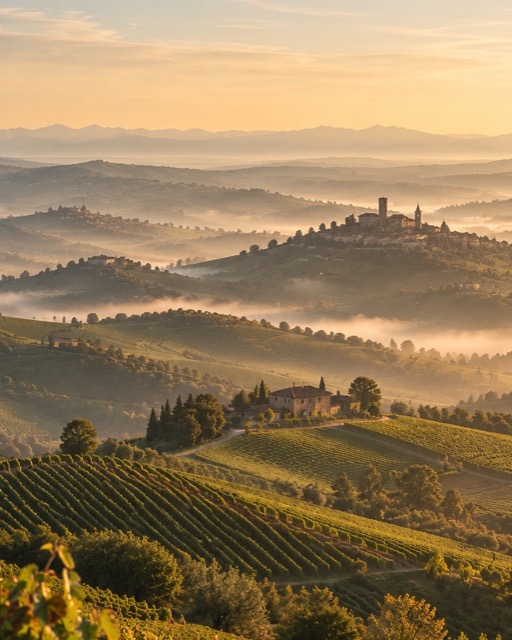
Patience
Nebbiolo, fog over the Langhe and the difference between two hills that can see each other. Barolo, Barbaresco and, of course, the white truffle of Alba.
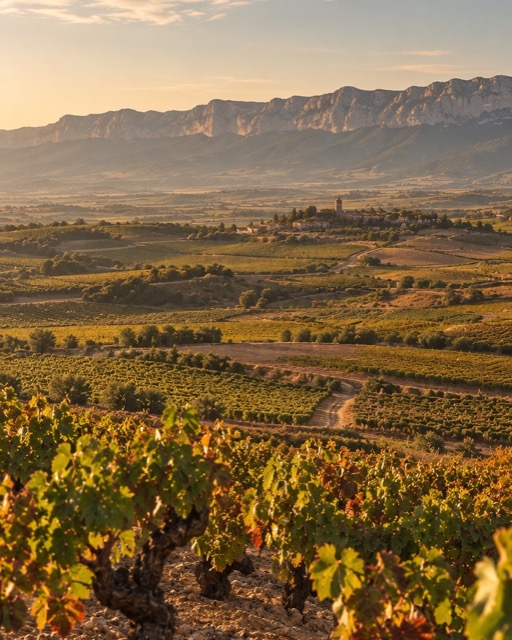
Oak & time
Crianza, Reserva, Gran Reserva. Nowhere is the effect of barrel ageing printed so neatly on the label. Taste three bottles from the same house and you see what time does.
Cosecha starts with five regions, but your wine passport is already a good deal bigger.
In the end it holds 86 wine regions to discover and collect. New destinations are added to Cosecha step by step. Every region has its own stamp. Finish the region, pass the Region Quiz and it goes into your passport.
On top of that there are 32 badges for other things you might come across along the way. Read everything in a region? Combed through the whole dictionary? Still reading in the middle of the night? That earns a badge.
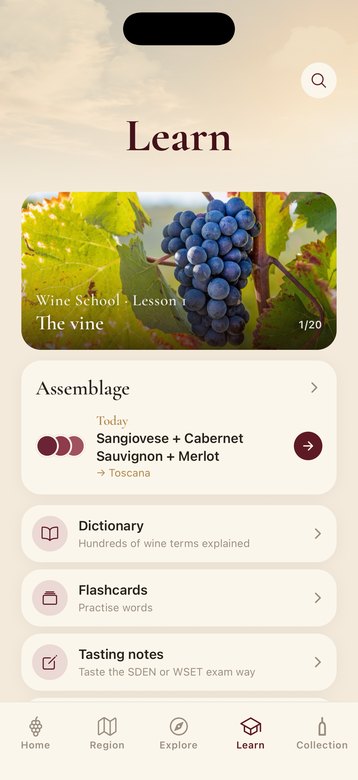
While reading you naturally come across things you want to know more about. That is why a reference grows alongside the regions, and everything for practising and tasting yourself sits together under Learn.
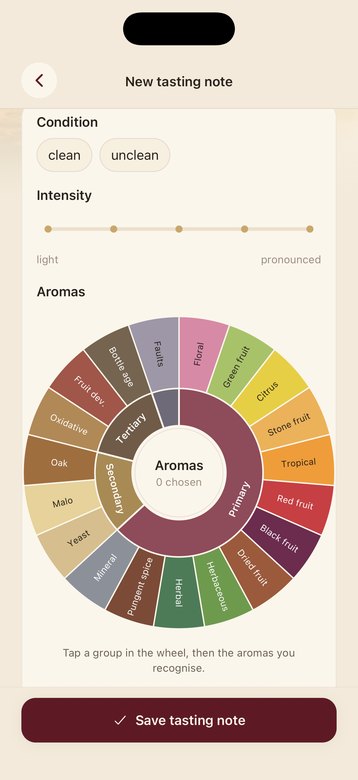
Record what you see, smell and taste, the WSET way or the SDEN way. The way wine courses teach it.
With sliders for acidity, tannin and finish, choices for colour and style, and an aroma wheel where you tap the scents you recognise. Fill in as much or as little as you like.
Cards to practise grapes, appellations and wine terms on their own.
The term on the front; on the back, one sentence on what it is and the hard facts. For when you have a wine exam, or want to know how much of all that reading has stuck.
Twenty lessons in four parts on how wine works: the vineyard, the cellar, the styles and the rules on the label.
Each part ends with a quiz. For the background that keeps coming back in the stories.
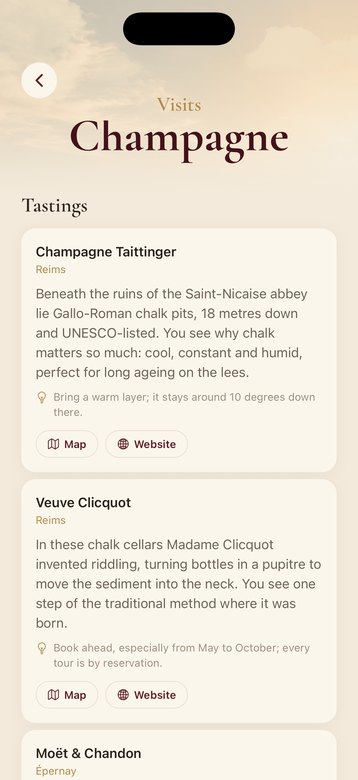
For every region, real places to visit: houses and estates where you can taste, viewpoints, wine routes and wine bars.
Every place has been checked, and one tap opens it in Apple Maps. Handy once you are there yourself, even without signal: the app works completely offline.
Twenty questions mixed from everything you have done so far, across all regions and the Wine School.
Never the same question twice, and a different mix every time. So you find out what has really stuck.
More than 200 terms, explained in plain language.
Cosecha recognises wine terms in the stories. Tap a word and the explanation appears straight away, without leaving your chapter.
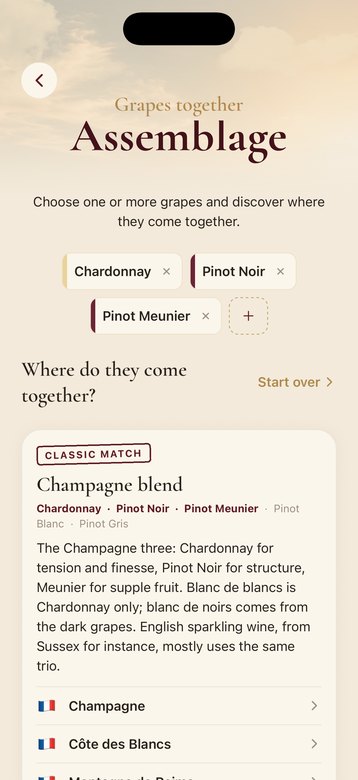
Choose one or more grapes and discover where they come together. Cabernet and Merlot take you to Bordeaux, Garnacha, Syrah and Monastrell to the southern Rhône.
You can only add grapes that really share a wine. Pick a single one and see where you will find it. And a different blend awaits you every day.
Where is Puligny-Montrachet? What is the difference between Pinot Blanc and Pinot Gris? And who is Egly-Ouriet, anyway?
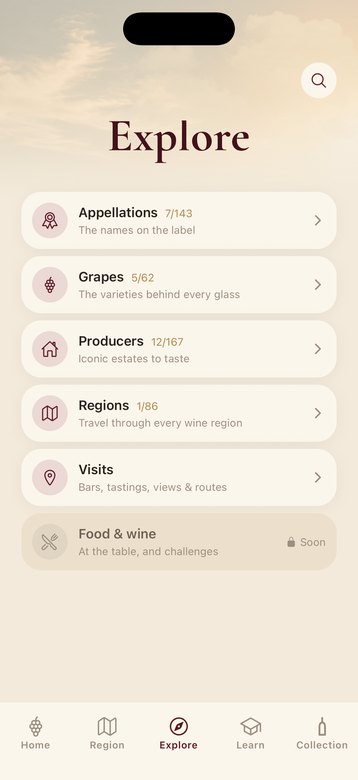
Cosecha holds a growing reference of more than 100 appellations, 70 grapes and 125 producers.
To dive into while reading, or to find again later when you are standing with a bottle in your hands.
The whole app is available in both languages: stories, quizzes and reference.
You switch with one tap, even in the middle of a chapter.
We want you to open Cosecha because you feel like reading about wine. Not because Cosecha thinks you should come back. That is why we deliberately leave a few things out.
No flames, daily goals or notifications because you did not read yesterday.
You are not a user we need to activate. You are a wine lover who likes to open their wine book.
No sign-up, profile or password. Open the app and start.
No advertising and no tracking of what you do. We have no wish to know.
Champagne and one region of your choice are free in the app, and you can read the first chapter of Burgundy, the Mosel, Piedmont and Rioja. No trial that runs out and no subscription that quietly starts afterwards.
Your passport counts 86 destinations. We are not building them all at once.
New regions are added one by one, each with its own stories, quizzes, landscape and stamp.
After Champagne and your second region, the free journey ends. Soon you will be able to unlock the other regions.
Your progress and your stamps stay just where they are.
Using what you have learned at the table. Understanding a wine list, knowing what to look for and choosing a bottle you have never had before with a little more confidence.
Cosecha is not finished.
Whatever is added should make the app better. Not busier.
A wine label usually tells you where a wine comes from.
Burgundy. Barolo. Mosel. Rioja.
But only once you know that place a little does a name like that start to mean something.
Then you know that the Riesling grew on a steep slope above the Moselle. That there are metres of chalk beneath Champagne. That in Burgundy two vineyards side by side can carry a different name, classification and price. And that a Rioja Gran Reserva spent years waiting before you could even buy it.
That is the moment wine becomes interesting.
Not just what you drink, but why it tastes the way it does. The soil, the climate, the grape, the people and the choices made in the cellar.
You can learn those things by heart, but we think you remember them better when you travel through them.
That is why Cosecha is not a collection of scores, scans or loose facts. It is a wine book you travel through. One region at a time, in short stories, with questions to see what has stuck and a reference for when you want to look something up later.
Cosecha means harvest in Spanish.
Because in the end every bottle starts there: with what came off the vines in that place that year.
Your first destination is waiting.
From the chalk beneath the vineyards to the bubbles in your glass.
Free. No account needed.